Role of Digital Marketing in branding
The urge to become an entrepreneur, to build a brand, and to grow a business has become incredibly popular today. But here’s the truth — people are struggling to find ways to make their brand stand out in the crowd.
If you are one among those, you are at the right place. Grab a cup of coffee, and let’s talk about this.
Once you use digital marketing intellectually, you’ll realize growing your brand is not rocket science. But if you don’t want to survive your competitors and make your brand into a money pool, you can skip this blog right now!
You are still here. That means you are already a step ahead of others. So, you may have already thought about what digital marketing does to your brand and how it helps your brand stand out from the rest. Before that, you should have a clear understanding of what digital marketing actually is.
What is Digital Marketing?
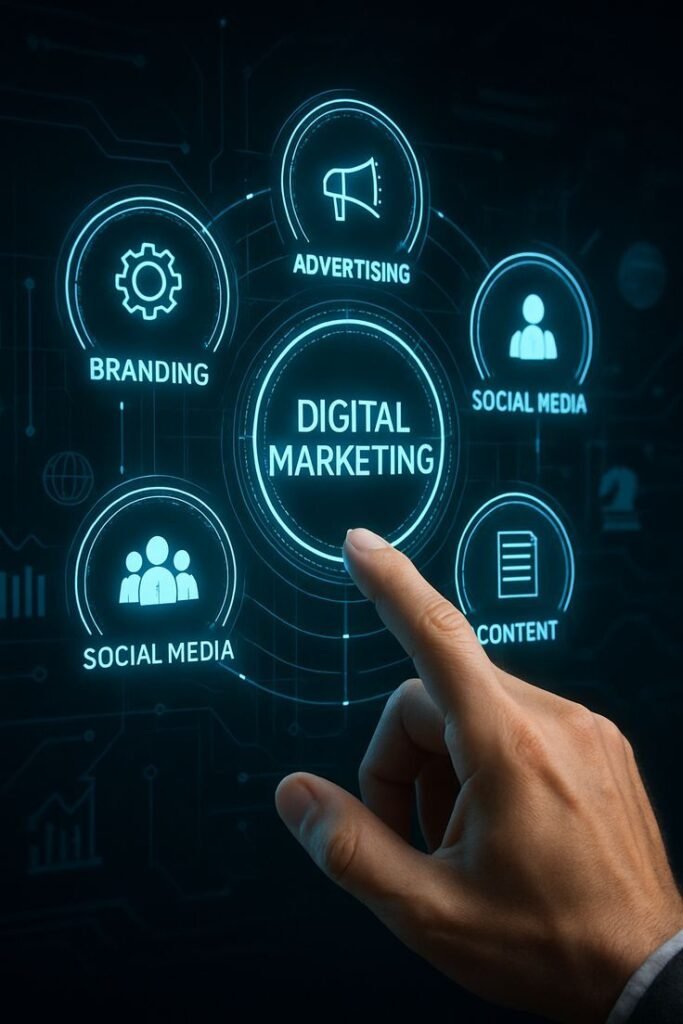
In simple words, digital marketing is the act of promoting products or services through digital channels. And when we talk about digital channels, it’s not just Instagram, Facebook, or WhatsApp. It can be classified into four major terms
Social Media Platforms (e.g., Instagram, Facebook, WhatsApp, LinkedIn, X, TikTok, etc.)
Search Engines (e.g., Google, Bing, Yahoo)
E-mails (for personalized marketing and communication)
Apps and Websites (including ecommerce sites and digital communities.
Why Digital Marketing?
Think of your daily life. Is it possible to live without your phone? How long can you go without scrolling through reels or watching YouTube shorts? Exactly, you can’t!
We are so connected (or rather addicted) to our digital devices that they have become an essential part of our lives. But here’s the magic: this “addiction” can be turned into opportunity. That’s exactly how digital marketing works — by meeting people where they already are.
It is the most effective, affordable, and measurable way to promote your brand in today’s digital world.
Advantages of Digital Marketing for Your Brand
1. How Digital Marketing Boosts Brand Recognition and Recall
When you see a tick mark with a tagline — “Just Do It” — you instantly know it’s Nike, right? That’s brand recognition in action.
Now imagine this happening for your brand. Someone sees your logo, tagline, or color palette and instantly remembers you. Feels amazing, doesn’t it?
Digital marketing helps create that recall through repeated exposure. The more frequently your audience sees your content, the more they remember you. Over time, this builds trust, credibility, and emotional connection — the pillars of a strong brand.
2. Why Digital Marketing is a Cost-Effective Branding Strategy
Traditional marketing — TV ads, billboards, radio — is expensive and limited in reach. Digital marketing, on the other hand, allows even small startups to compete with big players.
Platforms like Facebook Ads, Google Ads, or Instagram promotions let you control your spending. You can start with as little as a few dollars and still reach thousands of potential customers.
The Role of Digital Marketing in branding for Your Business
The ROI (Return on Investment) is often much higher than any traditional channel because every click, view, or conversion can be tracked and optimized.
3. Targeting: Reaching the Right Audience for Your Brand
Imagine you’ve launched a new women’s clothing line. Your target audience is women aged 18–40 who are interested in fashion, lifestyle, and beauty.
Would it make sense to show your ad to men aged 50? Of course not.
Digital marketing solves this with precise targeting. You can show your content only to the right people — filtered by gender, age, location, interests, online behavior, and more.
This ensures your brand message reaches those who are most likely to care.
4. Data-Driven Branding: Measuring Digital Marketing Success
Unlike traditional marketing, where you hope your ad is working, digital marketing gives you data-driven insights.
You can track everything — from the number of clicks on your ad to how many people visited your website, stayed on a page, or made a purchase.
With analytics tools like Google Analytics, Meta Business Suite, and Email Insights, you can adjust your strategy instantly. This allows you to improve continuously and make informed decisions for your brand.
5. Driving Brand Growth Through Higher Conversions
Digital marketing doesn’t just build awareness — it drives action.
Using powerful Call-to-Action (CTA) buttons like “Shop Now,” “Learn More,” or “Subscribe” and following the AIDA format (Attention, Interest, Desire, Action) can guide potential customers down your sales funnel.
The more persuasive and relevant your content, the higher your conversion rate.
How Digital Marketing Shapes Your Brand Identity
Your brand is not just a logo or a name — it’s an experience, a feeling, and a promise. Digital marketing helps you communicate this identity clearly and consistently across all touchpoints.
Here’s how:
1. Creating a Powerful Online Brand Presence Through Digital Marketing
In today’s world, your online presence is your brand’s first impression. When people hear about your business, the first thing they do is Google you or check your social media.
If they find a well-designed website, active social media profiles, and positive reviews — they instantly gain confidence in your brand.
Consistent digital marketing ensures that you appear active, credible, and relevant.
2. Brand Storytelling: Using Digital Marketing to Share Your Mission
Humans connect with stories, not sales pitches.
Through blogs, videos, social media posts, and email newsletters, you can share the story behind your brand — your values, your mission, and your journey.
This storytelling approach humanizes your brand and creates emotional bonds with your audience. For example, Nike doesn’t just sell shoes — they sell motivation, strength, and the spirit of “just doing it.”
Your digital marketing content should do the same — sell the emotion, not just the product.
3. Building Brand Loyalty Through Digital Engagement
Digital marketing allows two-way communication. Instead of shouting your message to the crowd, you can actually talk with your audience.
Reply to comments, engage in polls, answer DMs, and build a community around your brand.
A loyal community not only buys your products but also promotes them for you through word-of-mouth and social sharing — the most powerful marketing tool of all.
4. How Personalization in Digital Marketing Strengthens Brand Connections
One of the greatest strengths of digital marketing is personalization.
People love feeling special — and digital platforms allow you to do just that.
You can send customized email offers, show personalized product recommendations, and even target ads based on previous purchases.
When customers feel that your brand “gets them,” they are more likely to stay loyal.
5. Establishing Brand Trust and Credibility Online
5️⃣ “The Role of Different Digital Marketing Channels in Branding”
Trust is the foundation of every successful brand.
Digital marketing helps you earn it through:
Customer testimonials and reviews
User-generated content (like photos or feedback shared by customers)
Consistent posting and transparency
Valuable educational content (like tutorials, blogs, and free resources)
When your audience sees you as reliable and genuine, they won’t just buy from you — they’ll advocate for you.
The Role of Different Digital Marketing Channels in Branding
Let’s dive a bit deeper into how each channel contributes to brand growth:
1. Social Media Marketing: The Heart of Digital Branding
This is where your brand’s personality shines. Platforms like Instagram, Fac1. Social Media Marketing
ebook, LinkedIn, and TikTok let you showcase your brand voice, style, and values.
Use visual storytelling, behind-the-scenes videos, interactive posts, and influencer collaborations to connect with your target audience.
Consistency in tone, colors, and messaging across platforms strengthens your brand recall.
2. SEO’s Role in Building Brand Visibility and Authority
SEO ensures that your brand appears when people search for products or services you offer.
A well-optimized website builds organic visibility, credibility, and authority. When you rank on Google’s first page, people naturally trust you more.
Blog posts, keyword research, backlinks, and optimized landing pages all contribute to building a brand that dominates search results.
3. Email Marketing as a Tool for Brand Relationship building
Emails aren’t outdated — they’re one of the most powerful branding tools.
With email marketing, you can send exclusive updates, personalized offers, and valuable content directly to your audience’s inbox.
It’s a private channel that builds long-term relationships and keeps your brand top of mind.
4. PPC Advertising: Accelerating Brand Awareness
Want instant visibility? PPC ads help you reach your audience fast.
With Google Ads or Meta Ads, your brand appears right when people are looking for your kind of product or service. It’s like placing your store on the busiest street in the digital world.
5. Influencer Collaborations: Authentic Branding Through Digital Voices
Collaborating with influencers who align with your brand values can give you access to a highly engaged and trusting audience.
It’s like word-of-mouth marketing — but at digital scale.
Digital Marketing vs. Traditional Marketing
Traditional marketing methods — like TV commercials, billboards, radio ads, and print media — have long been used to promote brands. However, they often come with high costs, limited reach, and very little room for interaction or measurement.
You can’t always tell who saw your billboard or how many people were influenced by your newspaper ad. It’s mostly one-way communication, broad targeting, and slower results.
Digital marketing, on the other hand, changes the game entirely. It allows you to reach a global audience at a fraction of the cost. Every click, view, and conversion can be tracked, giving you clear insights into what works and what doesn’t.
Unlike traditional methods, digital marketing encourages two-way interaction — your audience can comment, share, or directly message you, helping to build genuine relationships.
Most importantly, it lets you target specific audiences based on age, gender, interests, and even behavior, ensuring that your message reaches the people who are most likely to engage. The results are faster, more measurable, and more flexible, making digital marketing the smarter, more dynamic approach to building a strong brand in today’s world.
How to Use Digital Marketing to Build Your Brand
Define Your Brand Identity — Know your mission, values, tone, and visual style.
Know Your Target Audience — Understand who they are, what they want, and where they spend time online.
Choose the Right Platforms — Don’t try to be everywhere. Focus on where your audience is most active.
Create Consistent, Quality Content — Consistency builds trust. Post regularly and maintain a unified brand voice.
Engage Authentically — Respond to comments, messages, and feedback. Be human.
Use Analytics — Track what’s working and what’s not. Adjust accordingly.
Invest in Paid Campaigns — Use ads strategically to boost brand awareness.
Build an Email List — Own your audience, don’t rely solely on social platforms
The future of branding is digital.
We’re living in a time when brands are built and broken online. Your digital presence is your identity, your credibility, and your connection with the world.
Those who embrace digital marketing early — and do it intelligently — are the ones who stay ahead.
Remember:
“Your brand is what people say about you when you’re not in the room.” — Jeff Bezos
Digital marketing helps shape that conversation — and ensures it’s one that speaks positively about you.
So, if you’re ready to make your brand not just visible but unforgettable, start harnessing the power of digital marketing today.
Because in this digital era, branding isn’t just about being seen — it’s about being remembering